|
The Lost English Girl |
by Julia Kelly |
 |
Discussion Questions |
1. Consider Sybil, the omnipresent, teacherly AI system aboard the Argos, to whom we are introduced in the prologue. Sybil's core objective is to keep the crew safe. As the novel progresses, Sybil's objective remains the same, but her role in Konstance's story grows more and more complicated. How does your opinion of Sybil change as the novel progresses? In your opinion, is she a sinister character, a benevolent one, or neither? 2. Early on in the novel, Anna is enchanted by an ancient fresco in an archer's turret; each time she looks at it, "something stirs inside her, some inarticulable sense of the pull of distant places, of the immensity of the world and her own smallness inside it" (page 36). How does Anna's response to the image of Cloud Cuckoo Land compare to Aethon's when he envisions a city in the clouds in Folio ?? What does Cloud Cuckoo Land represent for each of them? 3. Libraries play a central role throughout the novel, both as sanctuaries for children and as stewards of knowledge. Compare the library in Lakeport and the one aboard the Argos. How does the virtual library of Konstance's time differ from the library in modern-day Idaho? In what ways are they similar? Imagine a library in the year 2200 AD. What does your futuristic library look like? 4. In the immediate lead-up to the siege of Constantinople, Anna and Omeir suffer personal tragedies on opposite sides of the city walls. How does the loss of Maria, Moonlight, and Tree affect these characters? What do you think would have happened to them had they not encountered one another in the forest outside Constantinople? 5. After the death of Trustyfriend, Seymour falls into deeper and deeper mourning for his beloved forests and their inhabitants. As a teenager, he becomes enraptured with a militant environmental justice group, lead by a mysterious figurehead known only as "Bishop." In what ways does Seymour's ideology initially match that of Bishop's group? How does Seymour's ideology in his adolescence compare to his thinking later in life? In your opinion, what accounts for the change? 6. Throughout the novel, Konstance wonders what drove her father to join the crew of the Argos. Name a few plausible motivations. If you were in his position, would you be willing to accept a spot on the Argos and leave the Earth forever? Why, or why not? 7. Consider Zeno's epiphany-that "Diogenes, whoever he was, was primarily trying to make a machine that captured attention, something to slip the trap" (page 490). Why is this realization so important to Zeno? What is an example of a story that was meaningful to you during your childhood, and what impact has it had on your life? 8. To gain entry to Cloud Cuckoo Land, Aethon must correctly answer a riddle. "He that knows all that Learning ever writ, knows only this." The correct answer is "nothing." Recall that this section of the original Greek manuscript was too eroded to read. Why do you think Zeno chose to complete the riddle in this way? 9. On page 534, Omeir thinks to himself, "All my life . . . my best companions cannot speak the same language as me." What does he mean? What role does Omeir's empathy for all creatures, regardless of their ability to communicate verbally, play in the story? 10. Ilium employs Seymour to help overwrite "potentially undesirable items inside the raw image sets" (page 562). Over the years, Seymour begins to rebel, hiding bits of code in Ilium's system that, if touched, reveal the gritty reality beneath the corporation's glossy alterations. Why does Seymour decide to stop cooperating with Ilium? Do you agree with Seymour, that it is important to remember the past in its entirety, sadness, ugliness, and all? Why or why not? 11. Consider the two possible endings to Aethon's story. Based on Zeno's translation up to Folio X, which path do you think Antonius Diogenes intended Aethon to take? Why do the children at the Lakeport library prefer the version in which Aethon returns home, and how would your perception of Diogenes's tale be different if Aethon had remained in Cloud Cuckoo Land? How would it have changed your perception of Doerr's novel as a whole? 12. Consider the many examples of nostos, or "homecoming," in the novel: Konstance breaks free from the Argos and embarks on a life on Earth; Zeno returns home after the war to his quiet life in Lakeport; Omeir, too, returns home from war, to his beloved village in the Bulgarian hills; Seymour finds himself drawn to the virtual version of the hometown he left behind; Anna, always so restless, finds a peaceful life of love and intellectual freedom with Omeir. Which story did you connect with the most, and why? In your opinion, what does the novel have to say about the value of "home"? 13. Konstance's narrative bookends the novel. Why do you think the author chose to start and finish Cloud Cuckoo Land with her story? Discussion Questions by the Publisher Book Club Talking Points:
The themes that run through this book cover everything from tragedy and poverty to death, violence, and physical deformities. It's a literary read and challenging at times - but fans of Anthony Doerr will love it. |


|
 |
Looking for your next group read? Explore 4+ years of curated picks that actually spark a conversation ....
|
More Must-Read Books |
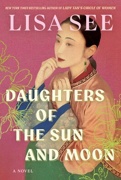 Daughters of the Sun and Moon
Beloved New York Times bestselling author Lisa See draws on the vibrancy and turmoil of post-Civil War Los Angeles to tell the story of three Chinese women who managed to survive and, eventually, thrive, despite all odds. ...More
|
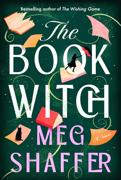 The Book WitchShe can hop into any novel, she just can't stay there. Come along with the book witch in this magical and inspiring love letter to reading from the USA Today bestselling author of The Wishing Game ... More
|
 Keeper of Lost Children
In this new novel from the New York Times bestselling author of The House of Eve, one American woman's vision in post WWII Germany will tie together three people in an unexpected way....More
|
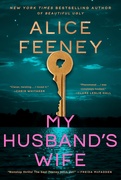 My Husband's WifeThe New York Times bestselling Queen of Twists is back with a psychological masterpiece that will leave you questioning everything you know about love, identity, and revenge. By the author of His & Hers, now a #1 Netflix show!... More
|
You May Also Like: |


|
Visit Our Blog |
 |
Most Antipipated Books of 2026 ..... Our Favorites.
|