|
The Forest of Vanishing Stars |
by Kristin Harmel |
 |
Discussion Questions |
1. Chapter 1 introduces readers to Jerusza and reveals her eccentric backstory. Why do you think the author opens the novel in this way? How does it frame your understanding of the narrative and of Yona and Jerusza as characters? 2. Discuss Jerusza's decision to steal Yona, a well-cared-for little girl, from her comfortable home and normal childhood and turn her into a "desperate, hungry warrior" (page 234) who didn't know what it was like to connect with another human being until she reached adulthood. Was this fair to Yona, who was never given the chance to choose between Jerusza and a life with her parents, who despite their major flaws, may have loved her? Do you believe, as Jerusza does, that Yona is better off with her in the wild than in the home of Nazis? Did you ultimately find Jerusza to be a good or evil character? 3. Early on in the novel we learn that Yona feels torn between her loyalty to Jerusza and her longing for the parents she never knew. How does this inform the decisions she makes after Jerusza passes? Do you think she would have made these choices had she not yearned for her parents or been told their names by Jerusza? Why do you think Jerusza tells her about her family and her home? 4. Throughout the novel Yona struggles with her identity. Being raised by Jerusza in the forest, she is unsure of her family's heritage and religious beliefs. She identifies with the Jewish faith, but it isn't until the end of the novel that she learns of her Jewish heritage. She also has German blood flowing through her veins and at one point even wonders if she has inherited her father's evil side. How does this confusion both help and hurt Yona? Do you think the choices she makes ever stem from a need to pay for the sins of her fellow Germans? Are our identities determined by birth, or is it possible to escape our pasts and create identities based on how we choose to live our lives? 5. Jerusza says, "Once fates intertwine, they are forever linked. Lives are circles spinning across the world, and when they're meant to intersect again, they do. There's nothing we can do to stop it" (page 34). Do you believe this sentiment? Do you believe in fate? 6. Why do you think Zus's and Aleksander's groups adjust to life in the forest with relative ease, as compared with Chana's family? Why do you think they trust Yona, while Chana's family does not? Would you trust Yona? Which of the qualities they possess do you think are most necessary for surviving in nature, outside of society? 7. Discuss how the forest acts as a character in the novel. Then discuss Yona's relationship with the forest and with nature. Does that relationship change in the course of the novel? If so, in what ways? 8. The characters in the book all experience their own heartaches-the death of loved ones, broken hearts, the kidnapping of a child. Discuss the role of grief and sadness in the novel and how that pain both brings the characters together and pushes them apart. Do you believe that pain helps us to better understand one another? If so, how? 9. Meeting her father is a defining point in the novel for Yona. Why is this meeting difficult for her? Does it change anything for her? How might she have gone on with her life had she not met him? 10. Juttner personifies the Nazi regime in this story and is easily the most hateful character in the novel. It could be argued, though, that he, too, is a victim of deep sorrow and incredible suffering. Do you think the author ever shows him in a kinder light or depicts him as more than just a villain? Do you think he comes to a fair end? 11. At the end of the novel, almost all of those Yona helps hide in the forest move back into society and attempt to regain a sense of normalcy. Why do you think Yona stays in the forest? Did this decision surprise you? What do you think Yona does for the rest of her life in the forest? 12. The book touches on loneliness in several forms-the solitude of living alone, losing family and friends, surviving in the face of death and persecution, finding company only to feel like an outsider. Loneliness is a powerful emotion that can both spur one into action and render one hopeless. Why do you think these different variations of loneliness cause the characters to make the decisions they do? How does their loneliness change them for the better or worse? 13. The Forest of Vanishing Stars portrays two major types of conflict: man versus man and man versus nature. Which conflict do you think is the larger issue for the characters in the novel-the Nazis hunting them, or the unforgiving forest? If the characters hadn't encountered Yona, would your answer change? How does the presence of two main conflicts increase the tension and urgency of the novel? Do you think this story of survival would be as powerful with only one major conflict? 14. Faith and the unity in belief is a strong theme throughout the book. Jerusza tells Yona that she believes in "everything and nothing. I am a seeker of truth, a seeker of God" (page 28). Meanwhile, Sister Maria Andrzeja tells Yona, "We all come to God in different ways" (page 196). The nun seems to believe everyone is on the same journey to understand God. Do you think that is true of the characters in the book? Do you think that is true of religions today? 15. While watching Aleksander, "Yona wanted nothing more in that moment than to step from the trees and be the answer to his prayer, the proof that after whatever terrible things he had endured to bring him here, there was a God after all. But who was she to think she could save anyone from the darkness?" (page 61). Yona feels compelled to help the refugees she meets, and those she helps survive in the forest often see her as a savior; it seems as if Jerusza also believes that kidnapping Yona was in service to a higher calling. Do you think Yona was in some ways a gift from a higher power? Discussion Questions by the Publisher |


|
 |
Explore 4+ years of curated picks that actually spark a conversation.
|
More Must-Read Books |
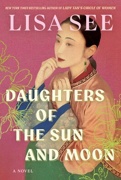 Daughters of the Sun and Moon By Lisa See
Beloved New York Times bestselling author Lisa See draws on the vibrancy and turmoil of post-Civil War Los Angeles to tell the story of three Chinese women who managed to survive and, eventually, thrive, despite all odds. ...More
|
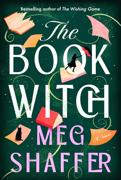 The Book Witch By Meg Shaffer She can hop into any novel, she just can't stay there. Come along with the book witch in this magical and inspiring love letter to reading from the USA Today bestselling author of The Wishing Game ... More
|
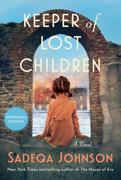 Keeper of Lost Children By Sadeqa Johnson
In this new novel from the New York Times bestselling author of The House of Eve, one American woman's vision in post WWII Germany will tie together three people in an unexpected way....More
|
 My Husband's Wife By Alice Feeney The New York Times bestselling Queen of Twists is back with a psychological masterpiece that will leave you questioning everything you know about love, identity, and revenge. By the author of His & Hers, now a #1 Netflix show!... More
|
You May Also Like: |


|
Visit Our Blog |
 |
Most Antipipated Books of 2026 ..... Our Favorites.
|
|
|