|
Lost Children Archive |
by Valeria Luiselli |
 |
Discussion Questions |
1. Whom do you immediately associate with the "lost children" of the title? How many layers of getting lost appear throughout the novel, and is it always/only children who are lost? 2. What are some of the reasons behind the family's trip to Apacheria? Discuss the parents' separate and combined work projects and their expectations for what will happen to the family once they reach their destination. 3. What is the difference between a documentarian and a documentarist? How do the two forms of study, observation, interpretation, and synthesis make their way into the story of the family and the structure of the novel itself? 4. Can you identify the source(s) of conflict between the husband and wife? Which memories of their early life together and time at home with the children, as well as how they respond to the children during the car ride, suggest why they might not be able (or willing) to stay together? 5. The wife/mother is the arguably the primary narrator of the novel, and it's through her that we understand the goings-on of the trip. Does she prove herself a reliable narrator, and if not, what are her biases in telling this story? 6. The seven boxes in the family's trunk each belong to a different family member. Do you think you could identify the owner of each box based solely on its contents? What does this suggest about how the characters know one another, and also about how they chose to represent themselves in what they packed for the trip? Consider the wife's question, "How many possible combinations of all those documents were there? And what completely different stories would be told by their varying permutations, shufflings, and reorderings?" (57). 7. Maps, news clippings, sound recordings, photographs, books, poems, loose notes-these are some of the items that appear in the boxes/text. The family also listens to music, and to audiobooks, in the car. How does having different media contribute to the polyphony of the novel? What do these documents suggest about whether the characters can, or cannot, know a definitive "truth"? 8. For most of the book the four family members don't have first names, except their chosen Apache names: Swift Feather, Papa Cochise, Lucky Arrow, and Memphis. How are these names more or less representative of their identities in this time period, and to what degree are they chosen or given? How do they ultimately help unite the family when they're separated, literally and figuratively? 9. How do the stories of Manuela's daughters and the children on the plane motivate the mother on her journey and in her work? 10. What are the most memorable and significant stops the family makes along the way? How do they reinvent themselves in various situations, and what does this flexibility in their identity suggest both about their bonds and about America today? 11. Consider the repeated stories that are told and read throughout the novel: Geronimo's fall, Elegies for Lost Children, "Space Oddity," Lord of the Flies, etc. How do they overlap with and inform the narrative of the novel? Do these connections influence your understanding of the novel as an "archive" in and of itself? 12. Although "the boy" is biologically related to his father and "the girl" to her mother, what connects the boy to the mother in the novel? Describe their bond, including how they test and support each other along this journey, and how they share space as. 13. How do the sections in Part II and Part III narrated from the boy's point of view reflect or shift the mother's point of view? Reading his interpretation of the events she narrated, did you find any holes, gaps, or misunderstandings in what she knew about him and Memphis-or (potentially surprising) similarities? 14. How does the boy's voice differ from the mother's, besides the obvious differences of their age and life experience? Consider his reliance on his camera, the Polaroids in his box, and the stream-of-consciousness narrative in the "Echo Canyon" chapter. 15. What are the children's ideas about what it will mean to be lost, and how do they each work to stay together even when they're forced apart? In this sense, are they more in control of their memories-that is, are they more or less "lost"-than their parents? 16. By the end of the novel, has the meaning of "home" changed for the characters? What are some of the ways home was lost, found, and reimagined? 17. The author offers a Works Cited at the end of the book to describe the various references and allusions she draws upon throughout the novel. How does this information change your understanding of what is fact versus fiction, and of the ways stories get passed down among works of art over time? After reading Luiselli's description of her methodology, would you describe her as a documentarian or a documentarist? 18. The novel draws upon a number of real-life current events and stories about the immigration crisis in the United States. How did you feel about the way this situation was presented? Does the author's referencing of so many histories and time periods, and narratives of displacement, create a more universal portrayal of being uprooted or without a country? Have you ever felt a similar kind of displacement? Discussion Questions by Publisher
|


|
 |
Looking for your next group read? Explore 4+ years of curated picks that actually spark a conversation ....
|
More Must-Read Books |
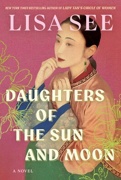 Daughters of the Sun and Moon
Beloved New York Times bestselling author Lisa See draws on the vibrancy and turmoil of post-Civil War Los Angeles to tell the story of three Chinese women who managed to survive and, eventually, thrive, despite all odds. ...More
|
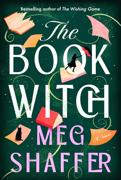 The Book WitchShe can hop into any novel, she just can't stay there. Come along with the book witch in this magical and inspiring love letter to reading from the USA Today bestselling author of The Wishing Game ... More
|
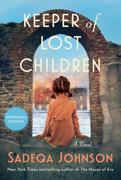 Keeper of Lost Children
In this new novel from the New York Times bestselling author of The House of Eve, one American woman's vision in post WWII Germany will tie together three people in an unexpected way....More
|
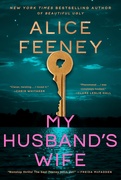 My Husband's WifeThe New York Times bestselling Queen of Twists is back with a psychological masterpiece that will leave you questioning everything you know about love, identity, and revenge. By the author of His & Hers, now a #1 Netflix show!... More
|
You May Also Like: |


|
Visit Our Blog |
 |
Most Antipipated Books of 2026 ..... Our Favorites.
|