|
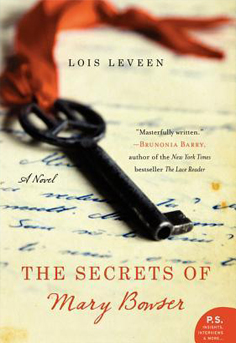
The Secrets of Mary Bowser |
by Lois Leveen |
 |
Discussion Questions |
1. The novel opens with two epigrams, one from Ralph Waldo Emerson and the other from Maria Stewart. What specific aspects of Mary's life confirm Emerson's belief that all of history is in one person, and that each person's life reflects national crises? Stewart, who was herself a black abolitionist, wondered if a woman might be the one to end slavery. In what ways does being female allow Mary and Bet to take on their great roles in history? 2. Often when we think of slavery, we think of plantations. How does slavery in Richmond differ from plantation slavery? How is it similar? What did you find most surprising about the lives of slaves and of free blacks in Richmond? 3. Though both of Mary's parents were born in slavery, their experiences of slavery were quite different: her mother was raised in New York, was taught to read, and worked as a house slave; her father was born on a plantation and performed skilled labor at the smithy. How do these differences shape the characters? 4. When Bet frees her slaves, Mary and her parents face a difficult choice because of Virginia law. Was Bet being selfish and headstrong when she chose to emancipate the Van Lew slaves without considering how being forced out of the community would affect them? Or was she doing the right thing by letting Mary's family and the other freed slaves decide on their own what to do? 5. Mary knows almost nothing about what Northern life is like when her parents decide to send her to Pennsylvania. What are the biggest surprises for Mary'and for you as a reader'about life in Philadelphia in the decade before the Civil War? 6. When we read the novel, we already know that during the war Lincoln signs the Emancipation Proclamation, and that after the Union victory, all the slaves become free. But Mary chooses to walk back into slavery without knowing for sure that these things will happen. Why does she make this choice? How does living free in Philadelphia shape her willingness to return to slavery in Richmond? 7. The Civil War was the bloodiest conflict in American history. The violence that marked the era erupts in very personal ways at numerous points in the novel: when Mary learns the story of the fugitive slave whom she and McNiven transport to New Jersey; when the Philadelphia abolitionists respond to John Brown's raid on Harper's Ferry; when Mary and Wilson learn about McNiven's participation in planning the explosion at the Confederate ammunition factory; and when a Confederate soldier threatens Bet's life. Ultimately, what do you think about the use of violence to right a deep wrong, such as slavery? Is it always justified, never justified, or, if it depends on the circumstances, what sort of circumstances justify intentionally killing someone else? 8. Mary admits to Wilson that she feels responsible for her father's death. Do you agree? Was she wrong to stay in Richmond to continue her spying rather than saving her only blood relative? 9. Mary's mother is certain that Jesus has a plan for her daughter. At times, Mary seems to share this belief, but at other times she doubts it. Wilson says her spying is the right thing to do, regardless. Do you think it matters whether Mary is choosing for herself to be a spy or whether she is fulfilling a plan that someone else'her mother, Bet, McNiven, or even Jesus'has for her? 10. Theodore and Wilson are very different. What attracts Mary to each of them? What attracts them to her? Do you see ways that her experience of being courted by Theodore affects her relationship with Wilson? 11. Over the course of the novel, Mary learns to trust a series of white people: Zinnie Moore, Thomas McNiven, Bet Van Lew, and Bet's mother. What are the qualities that Mary finds easiest to trust in each, and what are the things that challenge her trust? Why does she need to learn to rely on people who are so different from each other as well as from her? What does each of these characters learn from Mary? 12. The American playwright Eugene O'Neill wrote, "The past is the present, isn't it? It's the future, too." What does America today share with the past depicted in the novel? Do slavery and the Civil War still affect us? Discussion Questions by the Publisher |


|
 |
Looking for your next group read? Explore 4+ years of curated picks that actually spark a conversation ....
|
More Must-Read Books |
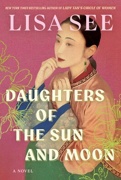 Daughters of the Sun and Moon
Beloved New York Times bestselling author Lisa See draws on the vibrancy and turmoil of post-Civil War Los Angeles to tell the story of three Chinese women who managed to survive and, eventually, thrive, despite all odds. ...More
|
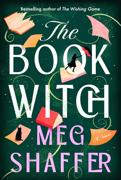 The Book WitchShe can hop into any novel, she just can't stay there. Come along with the book witch in this magical and inspiring love letter to reading from the USA Today bestselling author of The Wishing Game ... More
|
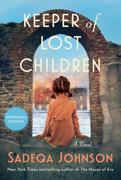 Keeper of Lost Children
In this new novel from the New York Times bestselling author of The House of Eve, one American woman's vision in post WWII Germany will tie together three people in an unexpected way....More
|
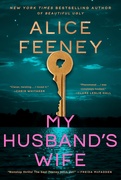 My Husband's WifeThe New York Times bestselling Queen of Twists is back with a psychological masterpiece that will leave you questioning everything you know about love, identity, and revenge. By the author of His & Hers, now a #1 Netflix show!... More
|
You May Also Like: |


|
Visit Our Blog |
 |
Most Antipipated Books of 2026 ..... Our Favorites.
|